GUTTER INSTALLATION & REPLACEMENT
What Homeowners Should Know Before Installing or Replacing Gutters
A properly designed gutter system starts long before anything is attached to the fascia. Learn how seamless gutters are made, how sizing and downspout placement affect performance, when replacement makes sense, and what to expect from a professional installation.
GET A FREE GUTTER ESTIMATE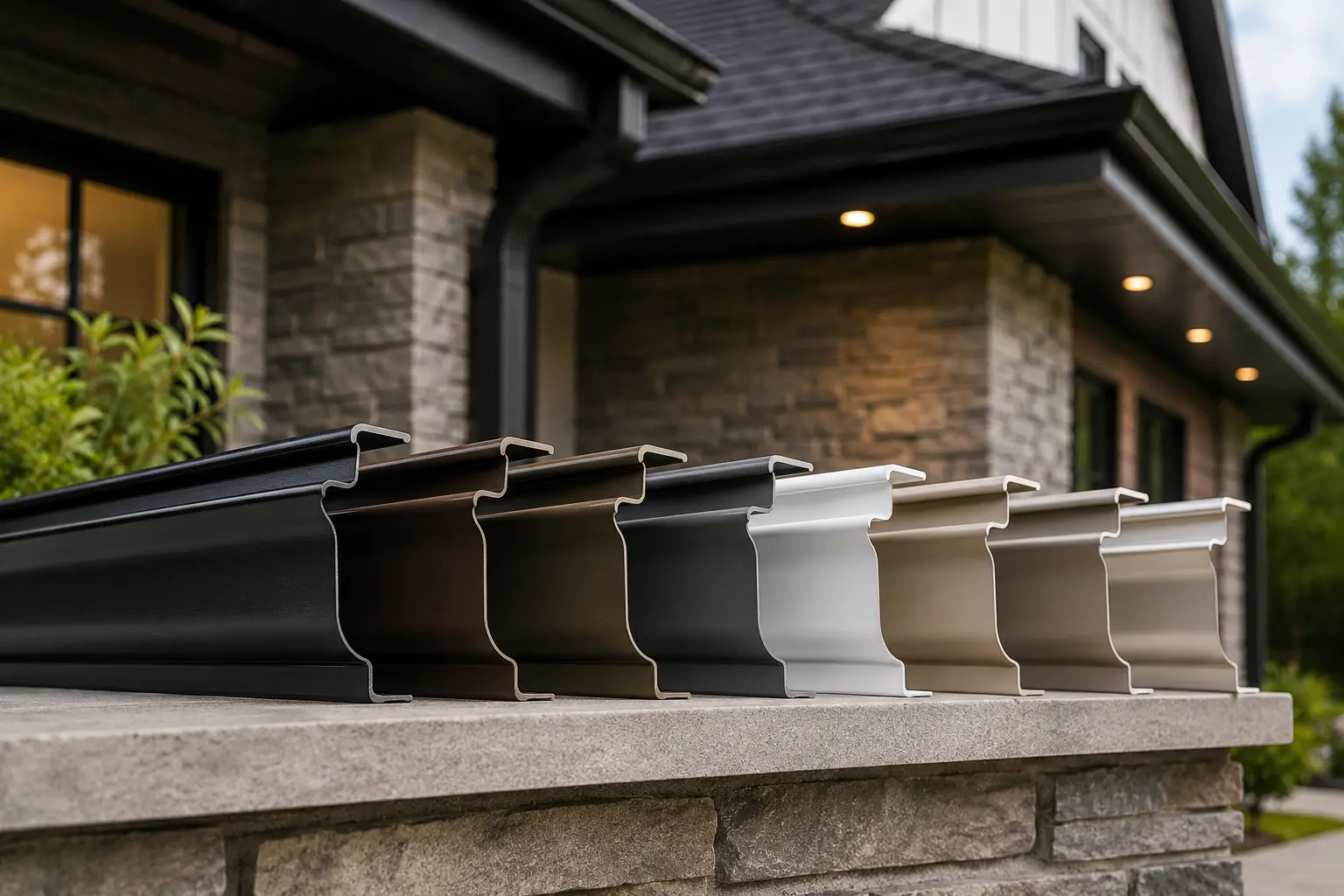
SEAMLESS GUTTERS EXPLAINED
What Does “Seamless” Actually Mean?
Seamless gutters are formed in continuous runs to match the measurements of the home. Instead of joining together multiple short sections along a roofline, long gutter runs can be fabricated specifically for the property.
The system is not literally free of every seam. Connections are still needed at corners, end caps, outlets, and certain transitions. The advantage is that long straight runs can contain fewer joints than a sectional gutter system, creating a cleaner appearance and reducing the number of connection points throughout the installation.
THE SYSTEM STARTS WITH THE HOME
There Is No One-Size-Fits-All Gutter Layout
Roof area, pitch, valleys, roof geometry, gutter profile, expected runoff, and downspout placement all influence how a system should be planned. Areas where several roof sections concentrate water may need different capacity than a simple roofline. The goal is to design the system around how water actually moves across the home—not simply install the same configuration everywhere.
GUTTER SIZING
5-Inch or 6-Inch? Capacity Matters More Than the Number
Gutter size affects how much water the system can carry. Larger is not automatically better, but a system that is undersized for the roof and rainfall conditions may struggle during intense storms.
5″
Common Residential Capacity
A 5-inch system may be appropriate for many straightforward residential rooflines when roof area, pitch, rainfall volume, and downspout placement support that capacity.
6″
More Capacity for Demanding Rooflines
A 6-inch system provides greater capacity and may make sense for larger roofs, steeper pitches, concentrated valleys, or properties where intense rainfall creates heavier runoff.
HOW PROFESSIONAL INSTALLATION WORKS
From Roofline to Finished Drainage System
01
Assess
Review the roofline, runoff, fascia, drainage conditions, and existing system if one is present.
02
Measure
Determine gutter lengths, sizing, outlet locations, and the layout needed for the property.
03
Form
Fabricate seamless gutter runs to the measurements of the home.
04
Install
Set pitch, secure the system, install outlets, and connect the downspouts.
05
Direct
Make sure runoff has a clear path through the system and away from the home.
WHEN IS REPLACEMENT NEEDED?
Sometimes the Problem Is Bigger Than One Repair
REPAIR OR REPLACE?
The Condition of the Whole System Matters
Repair May Make Sense When…
The issue is localized, the gutter profile and capacity still work for the home, and most of the system remains structurally sound. A damaged downspout, loose section, or isolated leak does not always require starting over.
Replacement May Make More Sense When…
Problems are widespread, repeated repairs are becoming routine, the system is improperly sized or pitched, or deterioration is affecting several parts of the installation. At that point, correcting the system as a whole can be more practical than continuing to chase individual failures.
WHAT TO EXPECT
What Happens on Gutter Installation Day?
The crew begins by preparing the work area and confirming measurements and system layout. If an existing gutter system is being replaced, the old components are removed before the new system is installed.
Seamless runs are fabricated for the home, secured along the roofline, and connected to the planned downspout locations. The work area is then cleaned and the finished system can be reviewed before the project is considered complete.
THE ROOF AND GUTTERS WORK TOGETHER
Your Roof Determines Where the Water Starts
Roof shape, valleys, pitch, and surface area determine how water reaches the gutter system. That makes roofing and drainage closely connected parts of the home’s exterior water-management system. If you’re also evaluating the condition of your roof, you can learn more about roofing systems and professional roof services through Trust Roofing.
VISIT TRUST ROOFING →INSTALLING FOR FLORIDA CONDITIONS
Heavy Rain Makes Drainage Planning More Important
Florida storms can put a large amount of water onto a roof in a short period of time. Concentrated valleys, steep roof sections, downspout locations, and where water ultimately exits the system all matter. A gutter system should be planned for the property and the rainfall conditions it regularly faces.
LEARN ABOUT FLORIDA DRAINAGE →
INSTALLATION & REPLACEMENT FAQ
Common Questions About New Gutters
Do I need to be home during my gutter installation?
No, you typically do not need to be home during your gutter installation as long as our crew has access to the exterior of the property and any necessary arrangements have been made beforehand.
How long does gutter installation typically take?
Most residential gutter installations can be completed in one day. Larger homes, complex rooflines, or projects involving additional work such as soffit and fascia replacement may take longer.
What should I expect during a gutter installation?
Our crew will remove the existing gutters if needed, prepare the roofline, and install your new gutter system with the proper pitch and downspout placement for effective drainage. We’ll clean up the work area once the installation is complete.
Will my old gutters be removed before the new gutters are installed?
Yes. If you’re replacing an existing gutter system, we’ll remove and dispose of the old gutters before installing the new system.
THINKING ABOUT NEW GUTTERS?
Let’s Figure Out What Your Home Actually Needs
Whether you’re replacing an aging system or installing gutters for the first time, our team can evaluate the roofline, drainage needs, sizing, and layout before recommending the right solution.
GET A FREE GUTTER ESTIMATE